
For issues such as fear, a starting plan may involve a minimum of three hypnotherapy sessions; issues such as addiction or weight loss may need six sessions. If you are considering hypnotherapy in 2026, choose a clear goal and agree on how you will review your progress.
- How many hypnotherapy sessions to see change? Fear may need at least three; addiction or weight-loss goals may need six.
- Hypnotherapy Mind offers standalone sessions, three-session packages, and six-session packages.
- Choose online sessions or in-person appointments at West Chase Commons, just north of Tampa.
- Your session plan supports your personal goals, with space to reflect on progress together.
Why this matters
When you want something in your life to feel different, asking how long it will take is natural. You deserve a conversation that makes room for that question without turning your personal experience into a deadline.
At Hypnotherapy Mind, I offer hypnotherapy for people seeking personal transformation in Tampa. My invitation is to begin with what matters to you: the response you want to practice, the feeling you want more room for, or the pattern you want to understand differently.
A useful session plan connects your goal, your experience, and your next step. That gives you something more practical than a number to compare yourself against.
How many hypnotherapy sessions does it take to see change?
There is no universal session count for seeing change through hypnotherapy. In my practice, issues such as fear may need a minimum of three sessions, while issues such as addiction or weight loss may need six. We discuss your needs together and review what you notice in everyday life.
Feeling settled in a session and responding differently in daily life are different observations. Both deserve attention, but they answer different questions. Your plan becomes clearer when you name which kind of change you are looking for.
| Planning focus | Best for | What to notice | What to consider |
|---|---|---|---|
| Session experience | Understanding your comfort with the process | Whether you feel heard and comfortable participating | A pleasant session is one part of your experience |
| Everyday response | Exploring a particular habit or situation | What you think, feel, or choose in that situation | You need a real-life opportunity to observe your response |
| Broader personal goal | Reflecting on several connected concerns | Which part of the goal feels most useful to address next | A broad goal needs a clear starting focus |
These are ways to organize your thinking, separate from the standalone sessions and packages I offer. You do not need to choose a permanent category before beginning.
Standalone hypnotherapy: one session, online or in person
I offer standalone hypnotherapy sessions either online or in person. My in-person sessions take place at West Chase Commons, just north of Tampa. You can discuss a specific concern and decide together what further support makes sense.
Fear: a minimum of three sessions may be needed
For issues such as fear, we may plan for a minimum of three sessions. I offer three-session packages so we can return to your chosen focus and review your experience across appointments. Your response and goals guide the next step, and some people need further support.
Addiction or weight loss: six sessions may be needed
For issues such as addiction or weight loss, a plan may involve six sessions, and I offer six-session packages. This gives us a structure for ongoing work, with time to explore your goals and reflect on your progress.
Hypnotherapy is not a replacement for medical care or specialist addiction treatment. If you are seeking support for addiction, discuss the plan with a qualified healthcare professional as well.
Thanksgiving and Christmas specials
I also run Thanksgiving and Christmas specials. Ask me about the current seasonal offer and its details when you enquire about sessions or packages.
For your 2026 planning, ask for an initial focus and a review point rather than a fixed prediction. The right question is not only how many sessions you will attend, but what those sessions are helping you work toward.
What counts as seeing change?
Before deciding whether to continue, put your goal into words you can recognize outside the session. Something like feeling better is meaningful, but it leaves a great deal open to interpretation.
You can keep the warmth of that intention while making it more specific. Ask yourself what feeling better would let you do, say, or experience differently in a situation that matters to you.
A change in how you feel
You might want more ease when you pause, more confidence before a conversation, or a greater sense of connection with your body. Your own intentions help shape the focus of your sessions.
Describe the feeling in your own language. You do not have to adopt a practitioner's words when your own description is clearer.
A change in what you do
A practical goal could involve making a deliberate choice instead of following a familiar habit. The important detail is the action you want to recognize when the relevant situation appears.
For example, you could define your aim as pausing before agreeing to an extra commitment. That gives you something specific to reflect on afterward without asking you to become a different person overnight.
A change in your relationship with yourself
Personal transformation can also mean noticing your inner language and choosing how you want to respond to yourself. Your goal might be to meet an uncomfortable moment with greater kindness.
Give that intention an everyday setting. A goal such as speaking to yourself more gently after a difficult conversation is easier to discuss than a sweeping wish to change everything at once.
Why your hypnotherapy session plan varies
Your plan should reflect your goals and experience. These factors are useful discussion points—not a formula that predicts how quickly change will happen:
- Your chosen focus. A specific situation gives you a clearer starting point than several unrelated goals grouped together.
- What change means to you. Feeling more at ease, making a different choice, and developing self-understanding call for different observations.
- Your comfort with the process. Questions about hypnosis, language, and participation belong in the conversation from the beginning.
- Opportunities to notice your response. Some goals relate to everyday situations; others involve events that happen less often.
- Your preferences between sessions. Discuss whether reflection or an agreed practice fits your life and feels useful to you.
- Your other support. If you also work with another practitioner, consider how each relationship serves your goals.
Bring these points into your planning conversation in 2026. Their purpose is to make your sessions more personally relevant, not to calculate a finish date.
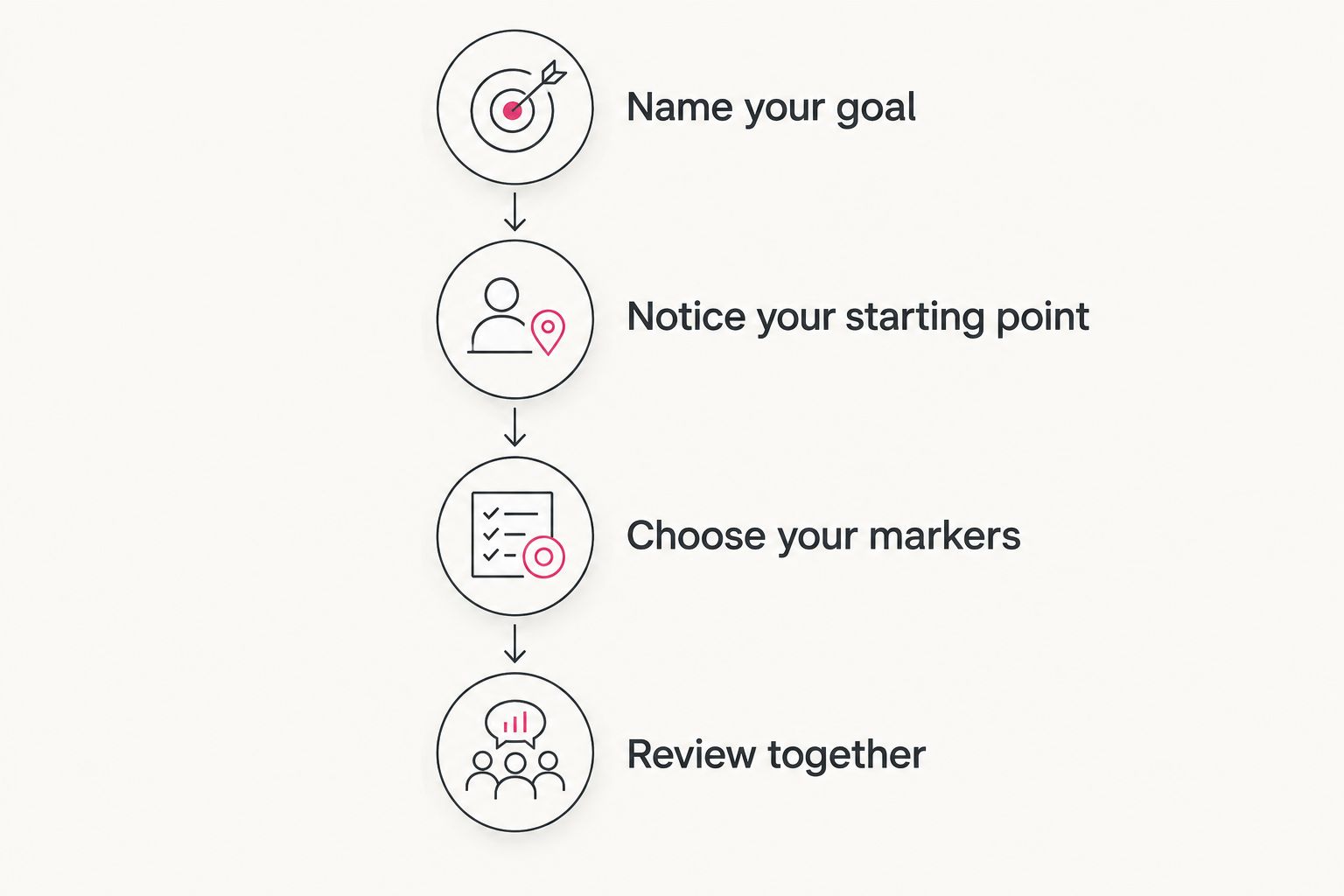
How to create a useful starting plan
You can approach hypnotherapy with curiosity and still ask practical questions. A clear plan leaves room for your experience while giving you a way to decide what comes next.
Name your goal
Choose the concern that feels most important to begin with. You can acknowledge connected concerns without asking every session to address all of them.
Try finishing this sentence: I would like to respond differently when something specific happens. Then describe the response you would prefer in plain language.
Notice your starting point
Write down how that situation feels now, what you tend to do, and what you would like to explore. Keep the description brief enough that you will actually return to it.
This is a personal reference point, not a test. You are giving yourself a fairer comparison than trying to remember exactly how everything felt before you began.
Choose your markers
Pick observations that belong to your goal. These might include a particular choice, a familiar thought, or how you describe your experience afterward.
Keep the markers separate from an idealized picture of complete transformation. You are looking for information that helps you understand your own experience, not evidence that you performed the session correctly.
Review together
Agree on when to talk about what you have noticed and what you want next. Bring the ordinary details, including anything that felt especially comfortable, useful, or unclear.
A review is an opportunity to choose. You can discuss continuing with the same focus, refining the goal, or giving yourself room to reflect before deciding.
What should you ask before your first session?
Your questions are part of choosing support that feels right for you. You can ask directly about the process without needing technical language or prior experience with hypnosis.
Useful questions include:
- What will we discuss before beginning hypnosis?
- How can I share my preferences during the session?
- How will we decide what to focus on?
- What would be useful for me to notice afterward?
- When will we review whether the current focus still fits?
- How do I bring up something I want approached differently?
Listen for explanations you understand and space for your own priorities. A conversation about your goals should feel like a conversation, not an instruction to adopt someone else's idea of success.
Hypnotherapy Mind is for Tampa individuals seeking hypnotherapy for personal transformation. If that describes what you are looking for, I welcome you to explore a starting point that reflects your own intentions.
Explore hypnotherapy with Candice
Bring your personal transformation goals into a conversation about hypnotherapy in Tampa.
How do you reflect between sessions?
Give yourself permission to notice ordinary moments rather than searching constantly for proof of change. A brief reflection after a relevant situation offers something concrete to discuss.
You might note what happened, how you responded, and what you want to explore next. Keep your words descriptive: I paused before answering tells you more than I did well or I did badly.
Include context when it matters. A quiet conversation and a crowded social event are different experiences, even when both relate to the same personal goal.
For a simple 2026 reflection practice, use a notebook or another private place you already feel comfortable using. Choose a format that supports your attention rather than becoming another task you feel obliged to complete.
You can also notice what you want to keep. Personal transformation does not require treating every familiar part of yourself as something to replace.
When is it useful to adjust your focus?
Adjusting a goal is a thoughtful choice when your original wording no longer captures what matters most. You might discover that you want to work on speaking up in a particular relationship rather than confidence in every area of life.
Bring that distinction into the next conversation. A more precise goal gives you a more useful subject to explore and a clearer way to describe your experience.
You can also ask to revisit the way a session is approached. Preferences about wording, pacing, and what feels comfortable deserve to be spoken aloud rather than left for someone else to guess.
Choose your next step from your current needs, not from pressure to reach a particular session total. The plan serves you; your experience does not have to fit a prewritten timetable.
Can I explore hypnotherapy alongside talk therapy?
You can discuss hypnotherapy with your existing therapist and prospective hypnotherapy practitioner when considering how it fits your support. Start by describing what you want from each relationship and asking how their approaches differ.
The guide to combining hypnotherapy sessions with traditional talk therapy explores that question separately. Keep your session-count decision connected to a clear purpose rather than assuming that more appointments automatically make a plan more useful.
How will I know whether to book another session?
Base the conversation on your goal, your observations, and what you want to explore next. A useful next session has a purpose you can put into words.
That purpose might be revisiting the same situation, discussing an observation, or refining your focus. You can also choose time to reflect before making another appointment.
What if my goal changes after I begin?
You can update your goal as you understand your priorities more clearly. Tell your practitioner what has shifted and ask how the next session would address that new focus.
Keep your earlier reflections rather than treating them as irrelevant. They can help you explain how your understanding has developed and what you now want from the work.
FAQ
How many hypnotherapy sessions to see change should I plan for in 2026?
For issues such as fear, a minimum of three sessions may be needed; addiction or weight-loss goals may need six. Candice offers standalone sessions, three-session packages, and six-session packages.
Should I expect a particular feeling during hypnosis?
Ask your practitioner to explain the process, and describe your own experience in your own words. Your comfort and questions are useful parts of the conversation, rather than something to compare against an ideal feeling.
How can I tell whether hypnotherapy is helping with my goal?
Compare your everyday observations with the specific goal you chose at the beginning. Bring concrete examples to your review so you can discuss what feels useful and what you want to explore further.
Do I need to choose all my goals before starting hypnotherapy?
You can begin with the goal that matters most to you now. Connected concerns can be acknowledged and discussed without making them all the focus of the same session.
What should I write down after a hypnotherapy session?
Write down anything you want to remember about your experience and any questions for your next conversation. When a situation related to your goal occurs, describe what happened and how you responded.
Can I ask for a different approach during hypnotherapy?
You can share your preferences and ask questions about wording, pacing, or focus. Bringing those preferences into the conversation helps you make an informed choice about your next step.
Where can I explore hypnotherapy for personal transformation in Tampa?
Hypnotherapy Mind offers in-person sessions with Candice Enriquez at West Chase Commons, just north of Tampa, as well as online sessions. Standalone appointments and three- or six-session packages are offered; ask about Thanksgiving and Christmas specials.
One last thing
Before choosing a session total for 2026, write a sentence describing an ordinary moment you would like to experience differently. Keep it somewhere you can return to without turning it into a daily assessment.
That sentence gives your intention a recognizable shape. Let your next step be guided by something meaningful to you—not by someone else's timetable.