
Hypnotherapy works by guiding your attention inward, then using suggestions and imagery connected to a change you want to make. This focused state can help you explore different responses to thoughts, feelings, and sensations while remaining an active participant. The process is collaborative: your goals, comfort, and willingness to engage shape the experience.
- How does hypnotherapy actually work? Focused attention, guided imagery, and suggestions help you practice responses connected to your goals.
- Hypnotherapy Mind offers hypnotherapy for people seeking personal transformation in Tampa.
- Hypnosis involves participation and awareness; you can speak, ask questions, and request a pause.
- Choose a practitioner who explains the process clearly and welcomes your preferences.
Why this matters
Understanding hypnotherapy helps you explore it with clarity and confidence. You remain an active participant, with room to ask: how can this approach support a change that feels meaningful to me?
I'm Candice Enriquez, the practitioner behind Hypnotherapy Mind in Tampa. Hypnotherapy Mind is for people seeking hypnotherapy support for personal transformation. As you explore your options in 2026, this guide explains the process in everyday language, with room for your questions and your own experience.
How does hypnotherapy actually work?
Hypnotherapy brings together focused attention and therapeutic suggestions. The practitioner helps you settle into an attentive state, then invites you to imagine, notice, or rehearse experiences related to your goal. Your participation and feedback help shape the guidance.
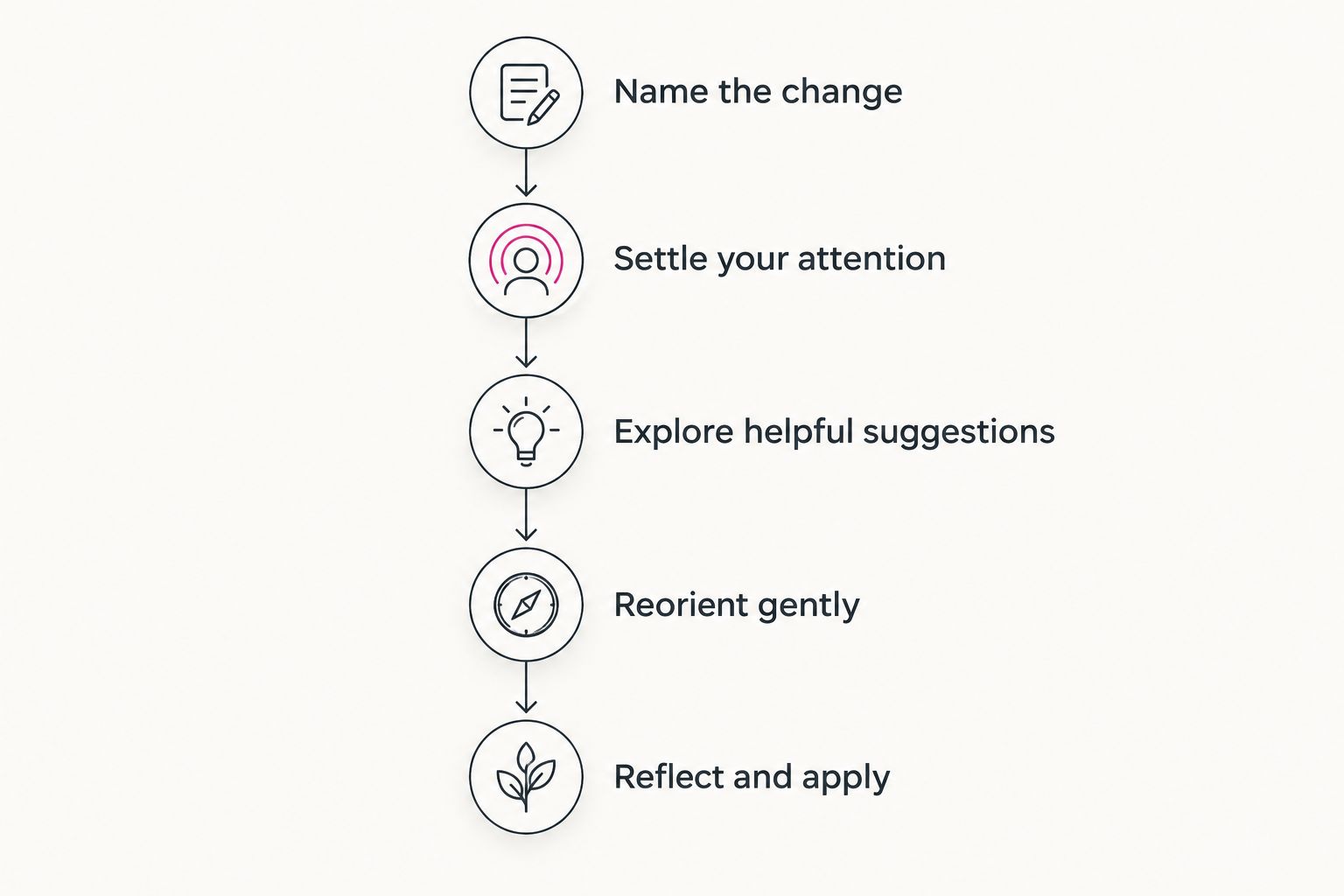
A session generally follows the sequence below, although the order and emphasis depend on the practitioner and your needs. Think of this as a flexible map that makes room for your individual experience.
1. Name the change you want
The conversation begins with what matters to you. That might mean responding more calmly in a familiar situation, changing a habit, or feeling more connected to a personal goal.
An everyday example is wanting to approach an upcoming conversation with greater steadiness. A useful goal describes what you want to practice: listening, speaking clearly, or noticing when you need a pause. You can begin with whatever words feel natural to you.
2. Settle your attention
The practitioner guides your attention using spoken instructions. Depending on the approach, these might involve breathing comfortably, noticing physical sensations, or imagining a peaceful setting.
Your thoughts can come and go naturally. The invitation is to gently return your attention to the guidance, much as you reconnect with the thread of an absorbing story.
3. Explore helpful suggestions
Suggestions connect the focused state with your chosen goal. These can take the form of imagery, encouraging language, or mentally rehearsing a response you want to develop.
For the conversation example, you might imagine feeling your feet on the floor before speaking. This illustrative practice scenario shows one way to explore a response you would like to develop. Its purpose is to make a desired response easier to picture and explore.
4. Reorient gently
The practitioner guides your attention back toward your surroundings. You might notice the chair beneath you, sounds in the room, and how you feel as you become more outwardly focused.
Your experience can feel deeply relaxing, absorbing, or comfortably attentive. Each description gives your practitioner useful insight into what feels natural and meaningful to you.
5. Reflect and apply
Afterward, you discuss what stood out and how it connects with everyday life. This helps turn an interesting experience into something personally relevant.
You can describe which words felt helpful, what held your attention, and what you would enjoy exploring next time. A useful session leaves room for your voice before, during, and after hypnosis.
What happens in your mind during hypnosis?
Hypnosis involves focused attention and a greater capacity to respond to suggestion. The American Psychological Association describes hypnosis in terms of focused attention, reduced peripheral awareness, and an enhanced capacity for responding to suggestion. Those features describe an absorbing experience in which you generally remain awake and able to communicate.
The practical idea is straightforward: you bring particular thoughts, images, or sensations into the center of your attention. A practitioner's guidance helps organize that attention around a therapeutic purpose. The exact experience differs from person to person.
Attention is part of the process
Imagine becoming absorbed in a book, with your attention centered on the story. This everyday example illustrates selective attention; clinical hypnosis uses purposeful guidance within a therapeutic setting.
During hypnotherapy, the focus is intentional. You work with suggestions connected to something you want to develop or understand.
The mind-body connection makes the work tangible
Thoughts and physical sensations influence one another. Anticipating a meaningful conversation can affect your breathing or muscle tension; imagining a comforting place can bring different sensations into awareness.
Hypnotherapy explores that connection through attention, imagery, and suggestion. Physical sensations have many possible causes, and your bodily experience can be part of how you notice and practice a new response.
Clear explanations support your understanding
When reading about hypnosis in 2026, look for explanations that connect the science with what you actually do. Clear descriptions of attention, imagery, and suggestion help you picture the session and ask informed questions.
Your awareness, choices, and participation belong at the center of the experience. Hypnotherapy offers guided, purposeful exploration shaped around your goals.
How is hypnotherapy different from self-hypnosis or meditation?
These practices can share focused attention, imagery, and quiet reflection. Their purpose and level of guidance distinguish them. Each offers room for a personal experience of attention and awareness.
| Approach | Best for | What supports the experience | What to consider |
|---|---|---|---|
| Practitioner-guided hypnotherapy | People who want individual guidance around a therapeutic goal | A practitioner offers suggestions and responds to your feedback | Comfort with the practitioner and clarity about the goal matter |
| Self-hypnosis | People who want to practice focused suggestion independently | You guide your own attention using a learned process or recording | Choosing suitable material and maintaining your own practice require attention |
| Meditation | People seeking an attention or awareness practice | The practice gives you a way to observe or return your attention | Its emphasis can be awareness itself; specific goals depend on the practice |
Practitioner-guided hypnotherapy offers conversation and adaptation. Self-hypnosis gives you more independence. Meditation encompasses many traditions and methods, so its focus depends on the practice you choose.
Each approach offers a different way to engage with your attention. If personal guidance matters most, explore that first. If you already enjoy an independent attention practice, describe it to your practitioner so the conversation begins with what feels familiar.
Why your hypnotherapy experience varies
Your experience is personal because attention, expectations, and goals are personal. A clear explanation helps you appreciate that individuality and explore the process with curiosity.
- Your goal: Practicing a new response to a specific situation gives suggestions a different focus than exploring a broader personal concern.
- Your preferred language: Concrete descriptions, gentle imagery, and direct suggestions feel different. Sharing your preferences helps guide the conversation.
- Your comfort with the practitioner: Being able to ask questions and express preferences supports an open, collaborative experience.
- Your surroundings: A private, peaceful setting supports your attention.
- Your response to imagery: Some people picture scenes vividly; others connect more readily with words, feelings, or physical sensations.
- Your everyday practice: If you agree on something to practice between sessions, a simple practice that fits your routine can be a meaningful place to begin.
You can engage through images, words, feelings, or physical sensations, with room to settle in your own way. Describing your experience gives the practitioner something useful to work with. Curiosity offers a welcoming starting point.
Will I still know what is happening during hypnotherapy?
You generally remain aware during hypnotherapy and can communicate with the practitioner. Focus can feel pleasantly absorbing while your choices remain part of the process.
You can ask for clarification, suggest an image that feels comfortable, or request a pause. Knowing that in advance makes the process more approachable. Before beginning, ask how your practitioner invites feedback during the focused portion of a session.
Your awareness can shift naturally throughout the experience. You might pay close attention to some words and become more absorbed in an image at another moment, much as attention shifts during other focused activities.
What can relaxation feel like during hypnotherapy?
Relaxation can feel gentle, deep, or simply like comfortable attentiveness. It is one way to help you settle your attention; hypnosis centers on focused attention and responsiveness to suggestion.
You might feel physically comfortable while your mind remains active. You might notice thoughts about your day before returning to the guidance. Both experiences offer room to gently reconnect with the guidance.
Share what you notice with your practitioner. Your observations help shape guidance that feels relevant and comfortable. The aim is meaningful engagement with your goal, at a pace that suits you.
How can you choose a hypnotherapist you feel comfortable with?
Start with a conversation about the change you want and the kind of support you value. In 2026, a clear, welcoming explanation can help you make an informed choice.
Ask the practitioner to explain their training, their approach, and how they work with your particular concern. You deserve understandable answers and space to consider them. Ask for specific credentials and an explanation of what the training involved so you can explore them with confidence.
Useful questions include:
- How do you turn my goal into the focus of a session?
- How can I share feedback while we work?
- How can we use words, feelings, or sensations in a way that feels natural to me?
- How will we discuss progress in terms that matter to me?
- What kind of practice, if any, would you suggest between sessions?
Listen for collaboration. A good conversation gives you a clearer picture of what you are choosing and respects your preferences about the experience.
A personal invitation from Candice
If you are seeking hypnotherapy in Tampa, I invite you to explore Hypnotherapy Mind as a place to begin a conversation about personal transformation. You can bring a clear goal, a question, or simply a wish to understand your patterns differently.
Your next step can be gentle and intentional. Explore the service, consider what you want support with, and bring those questions into the conversation.
Explore hypnotherapy with Candice
Learn about hypnotherapy in Tampa and consider your next step toward personal transformation.
FAQ
How does hypnotherapy actually work?
Hypnotherapy uses focused attention and therapeutic suggestions to help you explore and practice responses connected to your goals. You participate through listening, imagery, reflection, and feedback.
What will my awareness feel like during hypnosis?
You generally remain awake, aware, and able to communicate during hypnosis. The experience can feel absorbing, with attention centered on the practitioner's guidance or your own imagery.
How can I participate through words, feelings, or sensations?
Words, feelings, and physical sensations offer ways to engage with hypnotic suggestions. Share how you experience imagery so your practitioner can tailor the guidance to your preferences.
Can I ask to pause during hypnotherapy?
Yes, you can ask to pause or clarify something during hypnotherapy. Discussing how to communicate before beginning helps you feel comfortable participating.
How many hypnotherapy sessions will I need?
The number of sessions depends on your goals and how the work develops. Ask how the practitioner reviews progress and decides with you what comes next.
Can hypnotherapy fit alongside talk therapy?
Hypnotherapy can fit alongside talk therapy when the approaches suit your goals. Discuss that interest with the practitioners involved so each understands the support you are receiving.
What should I ask a hypnotherapist in 2026?
Ask about training, the session process, your goals, and how feedback shapes the work. Clear answers help you choose support that feels understandable and personally appropriate.
One last thing
Before your first conversation, finish this sentence: I would like to feel more… Choose an everyday moment where you would welcome that feeling, such as steadiness during a conversation or ease as you settle into your evening.
That small detail gives your goal a place to begin. As you consider hypnotherapy in 2026, let understanding, comfort, and connection with your goals guide your next step. Your attention, preferences, and voice belong in the work.