
Yes, hypnotherapy can be combined with traditional talk therapy, either within psychotherapy provided by someone trained in both approaches or through separate practitioners working toward compatible goals. The key is a thoughtful plan: understand each practitioner’s role, agree on what you want support with, and decide whether you want them to communicate.
- Can hypnotherapy be combined with talk therapy? Yes, with clear roles, shared goals, and your consent.
- Talk therapy offers conversation and reflection; hypnotherapy adds focused attention, imagery, and suggestion.
- Hypnotherapy Mind offers hypnotherapy in Tampa for individuals seeking personal transformation.
- Choose a pace that gives you space to reflect, practice, and feel heard.
Why this matters
You can understand an emotional pattern through conversation and still want another way to explore how it feels in your body. Combining approaches creates room for both reflection and experiential practice, without asking either approach to do everything.
For your 2026 care plan, the useful question is not which approach deserves your loyalty. It is what each approach contributes to your goals. You deserve a clear explanation of that contribution before adding another appointment to your calendar.
Hypnotherapy Mind provides hypnotherapy in Tampa for individuals seeking personal transformation. Hypnotherapy Mind is a local hypnotherapy option for Tampa individuals seeking personal transformation. When you are already in talk therapy, the next step is discussing how that support would fit alongside your existing care.
Can hypnotherapy sessions be combined with traditional talk therapy?
Yes. Hypnotherapy can complement talk therapy when the work has a clear purpose and each practitioner stays within their training and professional role. Hypnosis involves focused attention and responsiveness to suggestion; psychotherapy can include hypnosis when the therapist has appropriate training.
The distinction between approaches helps you ask better questions. Talk therapy is not simply talking, and hypnotherapy is not simply relaxing: both involve a purposeful process shaped by the practitioner’s methods and your goals.
| Approach | What the work involves | Best for | What to clarify |
|---|---|---|---|
| Talk therapy | Conversation, reflection, and therapeutic methods appropriate to the therapist’s approach | People wanting space to understand experiences, relationships, thoughts, and behavior | The therapist’s methods, qualifications, and goals for your work |
| Hypnotherapy | Guided focused attention, imagery, and suggestions connected to an agreed goal | People interested in an experiential way to explore personal change | The practitioner’s training, scope, and approach to consent |
| A coordinated combination | A plan that gives conversation and hypnosis distinct, compatible roles | People who want both approaches and a clear reason for using them together | Who does what, how goals align, and what information you choose to share |
These are starting points for a conversation, not a formula for choosing care. Your preferences matter, and the right plan should be understandable in everyday language.
Working alongside your psychologist or psychiatrist
Candice Enriquez is not a psychologist or social worker. She offers hypnotherapy and can work alongside your psychologist or psychiatrist with a referral. Her hypnotherapy services complement, rather than replace, the care provided by those professionals.
Separate practitioners with compatible goals
You can also discuss receiving hypnotherapy separately while continuing talk therapy. In this arrangement, each practitioner needs a clear understanding of their own role, and communication between them requires your permission and appropriate privacy procedures.
Best for: someone who wants to continue an established therapy relationship while exploring hypnotherapy separately. This arrangement asks a little more of your planning. You will want clarity about which practitioner addresses which concerns and how to raise questions when the approaches overlap.
Working with separate practitioners does not need to feel complicated. A useful explanation sounds like a clear description of who supports what—not a list of impressive terms.
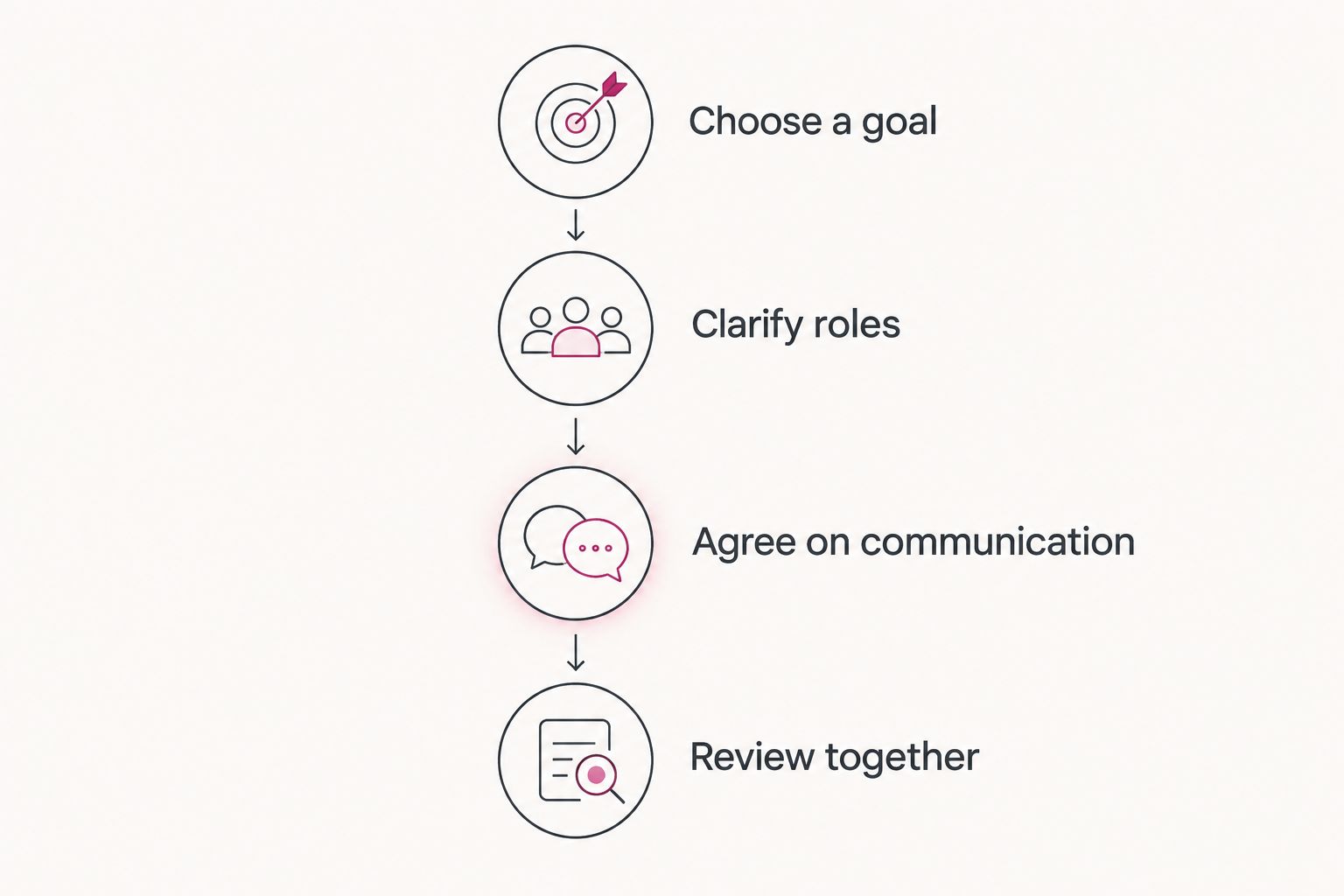
How do you bring hypnotherapy into an existing therapy plan?
You do not need to arrive with a finished treatment plan. Start with your experience and let the practitioners explain how their work would fit.
1. Choose a goal
Name one goal in ordinary language. You might want to speak up more comfortably, respond differently to a familiar situation, or feel more connected to yourself. These are examples to discuss, not promises about what hypnosis will accomplish.
Make the goal recognizable in daily life. Instead of aiming to become a completely different person, describe something you would like to practice, notice, or approach with greater ease.
2. Clarify roles
Tell your therapist that you are interested in hypnotherapy and ask how it relates to your current work. Ask the hypnotherapy practitioner the same question, including what falls within their professional scope.
When there are two practitioners, you should be able to explain each role in a sentence. That clarity supports informed choice and gives you somewhere to take questions about your care.
3. Agree on communication
Decide whether you want the practitioners to speak directly. Ask what permission is required, what information would be shared, and how you can limit that sharing to what is relevant.
You can also ask what each practitioner needs to know before beginning. Coordination does not mean giving up your voice or sharing every personal detail with everyone involved.
4. Review together
Agree on how you will discuss your experience after adding hypnotherapy. Talk about what felt useful, what you want explained, and whether the pace still fits your life.
A review is a conversation, not a performance test. You are allowed to ask for a different emphasis, more explanation, or additional time to reflect.
Why your combined plan varies
A personal plan should reflect your needs rather than follow a standard schedule. In 2026, these are useful factors to discuss before deciding how to combine approaches:
- Your goal: Personal growth, changing a habit, and addressing a mental health concern call for different conversations about scope and qualifications.
- Your current therapy: The methods and priorities already guiding your psychotherapy affect how additional work fits.
- Practitioner qualifications: A hypnosis qualification and a mental health license are different credentials with different meanings.
- Your preferred experience: You might enjoy discussion, guided imagery, focused attention, or a thoughtful balance of these.
- Your capacity: Appointments and between-session practices need to fit your energy, responsibilities, and room for reflection.
- Your communication preferences: Decide whether direct practitioner contact feels helpful and what you consent to share.
Choose a plan you understand and feel comfortable discussing. A practitioner should be able to explain the purpose of the proposed work without asking you to accept a promised result.
What does mind-body connection mean in this setting?
Mind-body connection can sound abstract. Here, it means paying attention to how thoughts, emotions, physical sensations, and behavior relate to one another in your experience.
For example, a conversation about speaking up might include noticing a tight jaw or a held breath. Hypnotherapy can involve guided attention, imagery, or suggestions connected to your agreed goal, while talk therapy gives you space to explore the situation’s meaning. The exact methods depend on each practitioner’s training and approach.
You do not have to describe that experience perfectly. Everyday observations—feeling more settled, noticing tension sooner, or understanding a reaction differently—give you useful material to discuss. They are personal observations, not a requirement to demonstrate progress after every session.
What should you ask before booking hypnotherapy?
Bring three questions to your first conversation: What is your training? How would this work relate to my current therapy? How will we decide what to focus on? The answers should leave you clearer about the service and your choices.
You can then explore the practical details:
- What does a typical session involve?
- How do you explain hypnosis before beginning?
- What happens if I want to pause or change direction?
- What experience do you have working alongside licensed therapists?
- How do you handle requests to communicate with another practitioner?
- How do we review whether the work still fits my goals?
For a 2026 practitioner search, choose clear answers over persuasive promises. Warmth matters, and so does knowing what the practitioner is qualified to offer.
A personal invitation to explore change
You can value the insight you have gained in therapy and still feel curious about a more experiential approach. Hypnotherapy Mind offers hypnotherapy for personal transformation in Tampa, giving that curiosity a relevant place to begin.
Make room for support that connects your goals with your lived experience. Explore the service, bring your questions, and discuss how hypnotherapy would fit alongside the care you already value.
Explore your next step
Explore hypnotherapy with Candice Enriquez in Tampa and bring your questions about combining support.
Can my talk therapist also provide hypnotherapy?
Yes, a talk therapist can incorporate hypnosis when they have appropriate training and it fits their professional scope. Ask about their hypnosis training specifically rather than assuming it is part of every therapist’s practice.
If your therapist does not offer hypnosis, you can discuss what exploring a separate practitioner would involve. Keeping that conversation open helps you make a considered choice.
Do hypnotherapy and talk therapy need to happen together?
No, the approaches do not have to take place in the same appointment. A practitioner trained in both can explain how they integrate them; separate practitioners can discuss compatible roles with your consent.
Choose timing through a conversation about your needs, not a rule found online. For your 2026 schedule, include enough space to reflect on appointments and follow the practices you have actually agreed to use.
How do I know whether the combination feels useful?
Start with the goal you chose and bring concrete observations to your appointments. What feels clearer? What have you practiced? What would you like more help understanding?
Useful support leaves room for honest feedback. Feeling relaxed during a session and noticing a meaningful change in everyday life are different observations; both can be discussed without treating either as a promised outcome.
FAQ
Can hypnotherapy be combined with talk therapy?
Yes, hypnotherapy can be combined with talk therapy through an appropriately trained therapist or separate practitioners with compatible roles. Discuss your goals, practitioner qualifications, and communication preferences before beginning.
Will I still be able to speak during hypnosis?
Yes, hypnosis can include speaking and responding to the practitioner. Ask how the practitioner invites feedback and how you can pause or adjust the process.
Is a hypnotherapist the same as a licensed talk therapist?
The titles describe different qualifications, although a practitioner can hold both. Ask separately about hypnosis training, professional licensure, and the scope of the service being offered.
Do I need to tell my therapist I want to try hypnotherapy?
Discussing your interest with your therapist helps you consider how hypnotherapy would fit your existing work. Direct communication between practitioners requires your permission and appropriate privacy procedures.
Can I keep personal details private when practitioners coordinate?
You can ask what information would be shared and discuss limits before authorizing communication. Ask each practitioner to explain their consent process and applicable privacy requirements.
What should I ask about combining therapy approaches in 2026?
Ask about qualifications, the purpose of each approach, communication, and how you will review the plan. Choose explanations that make sense to you and leave room for your preferences.
Does Hypnotherapy Mind offer hypnotherapy outside birth preparation?
Yes, Hypnotherapy Mind provides hypnotherapy for individuals seeking personal transformation. You can explore that service in relation to your own goals and discuss how it would fit alongside talk therapy.
One last thing
More appointments are not the goal. A meaningful combination gives each approach a clear purpose and leaves you room to live, reflect, and practice between conversations.
Before your next appointment, write one sentence beginning with what you want support to help you approach differently. Bring it with you. That small act keeps your own voice at the center of the plan.