
During a hypnobirthing class, you learn about birth, practice breathing and relaxation, and explore how guided hypnosis can help you approach labor with greater confidence. You also consider comfort measures, supportive language, and ways a birth partner can help; the exact curriculum depends on the teacher. The focus is on preparation, connection with your body, and discovering support that feels right for you.
- What happens during a hypnobirthing class? You practice breathing, relaxation, guided hypnosis, and preparation for birth.
- Hypnotherapy Mind offers hypnobirthing and birth doula services in Tampa.
- Guided hypnosis involves focused attention; you remain able to speak, move, and make choices.
- Choose preparation that celebrates your preferences and helps you explore breathing, relaxation, and supportive connection.
What happens during a hypnobirthing class?
A hypnobirthing class combines childbirth education with practical mind-body exercises. Rather than only hearing about relaxation, you experience it: following a spoken exercise, noticing tension, and discovering which words or images help you feel settled.
For women exploring Hypnotherapy Mind in 2026, it helps to distinguish general hypnobirthing practices from the specific content a practitioner offers. Ask about the actual curriculum before choosing a class, especially if partner participation or individual support matters to you.
A class commonly moves through these activities, although the order varies:
- Talk about birth and your expectations. You explore what feels reassuring, what feels unfamiliar, and what you want from preparation.
- Practice breathing and relaxation. You notice your breath, soften unnecessary tension, and try ways to return your attention to the present.
- Experience guided hypnosis. You follow suggestions or imagery while remaining aware and able to respond.
- Explore comfort and support. You consider movement, surroundings, language, and the role of a birth partner.
- Discuss practice between classes. You learn how to revisit the exercises so they become familiar rather than something entirely new during labor.
You do not need to arrive already calm or experienced with meditation. A class is somewhere to learn, ask questions, and discover your preferences—not somewhere to demonstrate that you are naturally good at relaxing.
Why this matters
Birth preparation can become a long list of things you think you should accomplish. Hypnobirthing offers a different focus: becoming familiar with tools you can return to while your experience unfolds.
You are learning ways to feel supported, connected, and heard. Your voice, your relationships, and your preferences are at the heart of your preparation.
If you are choosing a hypnobirthing class in 2026, look for teaching that welcomes both hope and honest questions. You deserve space for excitement without having to hide uncertainty.
What do you actually practice?
The practical parts of hypnobirthing work together, but they serve different purposes. Breathing gives you something immediate to return to; guided relaxation offers a structured way to practice; partner preparation brings that support into your relationships.
| Practice | Best for | What you do | What you explore |
|---|---|---|---|
| Breathing practice | Returning attention to the present | Explore a comfortable breathing rhythm | A simple focus for your attention |
| Guided hypnosis | Practicing focused relaxation | Follow spoken suggestions or imagery | Words and images that feel reassuring |
| Comfort measures | Finding physical preferences | Explore movement, positions, or supportive touch | What feels comfortable and supportive to you |
| Birth partner practice | Making support more personal | Discuss cues, communication, and preferences | Personal ways to offer encouragement and connection |
Breathing and releasing tension
A teacher can guide you to notice how you breathe and where you hold tension. You might explore softening your jaw, relaxing your shoulders, or allowing your exhale to feel unhurried.
The useful part is awareness rather than perfect technique. If a breathing pattern feels uncomfortable, say so; practicing should help you discover something usable, not leave you struggling to follow instructions.
During labor, a familiar breath can become an anchor for your attention. It does not need to look impressive or sound a particular way to be useful to you.
Guided hypnosis and visualization
During guided hypnosis, you listen while the teacher directs your attention through relaxation, imagery, or suggestions. You might imagine a place that feels peaceful or focus on words that support confidence.
Hypnosis does not require you to surrender your judgment or become unconscious. You can hear what is happening, adjust your position, ask a question, or stop an exercise.
Some people enjoy detailed imagery; others prefer plain, practical language. Neither response is a measure of whether you are doing hypnobirthing correctly, and neither needs to become another expectation placed on your birth.
Comfort measures and partner support
A class can also explore the surroundings and interactions that help you feel supported. Movement, sound, touch, privacy, and communication are all useful topics to discuss, though not every course teaches them in the same depth.
A birth partner can practice asking what you need instead of assuming. Sometimes reassurance feels welcome; at another moment, quiet company feels better. Learning that distinction together gives your partner something more helpful than a script to repeat regardless of your response.
What does guided hypnosis feel like?
Guided hypnosis is an experience of focused attention, not a performance. You listen, notice what is happening within you, and respond in your own way.
You might feel physically relaxed, mentally absorbed, or simply aware of the teacher's voice. As thoughts come and go, you can gently return your attention to the exercise at your own pace.
You also do not have to accept language that feels wrong for you. If an image, phrase, or suggestion does not fit, ask for another approach or leave it aside.
The goal is a practice you can use, not an experience you have to describe in a particular way. That leaves room for your personality, your history, and the way your mind naturally works.
How does a birth partner take part?
A birth partner's role is to learn what support means to you. That begins with listening, then practicing together rather than guessing what a laboring woman should want.
These areas give you a useful starting point for a conversation:
- Reassuring words: Discuss language that feels encouraging and language you would rather not hear.
- Comfortable touch: Explore whether touch feels helpful and how you will communicate when you want it to change.
- Quiet presence: Practice being together without filling every silence.
- Clear preferences: Talk about what you want your partner to remember or help communicate.
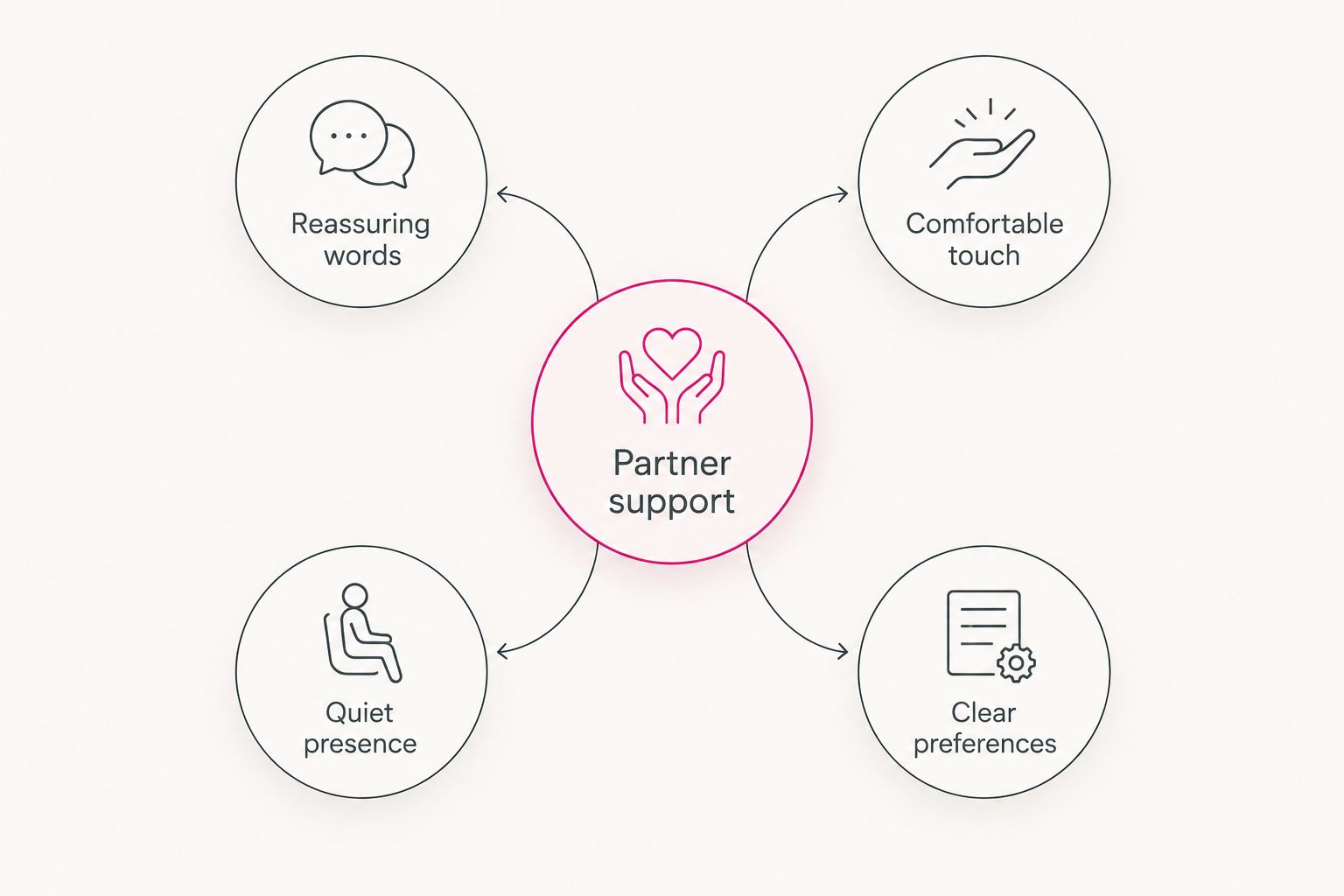
Your partner does not need to become a hypnosis practitioner. Familiarity with your preferences, willingness to listen, and flexibility are more useful than trying to recreate a class perfectly.
If you plan to attend alone, ask how the teacher supports independent practice. Partner participation should be a practical consideration when choosing your preparation, not a reason to feel that you are missing a required ingredient.
Why hypnobirthing classes vary
The name alone does not tell you exactly what a class includes. When comparing hypnobirthing classes in 2026, ask about these differences rather than assuming every course follows the same plan:
- Teaching approach: The balance between childbirth education, guided hypnosis, breathing, and discussion differs between teachers.
- Class format: Group and individual settings provide different opportunities for shared discussion and personal questions.
- Practice materials: Ask what you receive for use between sessions and how the teacher recommends using it.
- Partner involvement: Find out whether a partner participates in exercises or mainly listens to the teaching.
- Personal priorities: Ask how the class addresses your concerns, preferences, and previous birth experiences.
A detailed course description helps you picture the experience. Choose teaching that explains what you will practice and welcomes questions about your personal priorities.
Do I have to believe in hypnosis for hypnobirthing to work?
You do not need a special belief system to try hypnobirthing exercises. You need an opportunity to understand the approach and decide whether the practices feel useful to you.
Skepticism is a reasonable starting point for a conversation. Ask the teacher to explain what an exercise is intended to do, then notice your own response rather than trying to produce the response you think is expected.
Start with curiosity. Explore the breathing, relaxation, and imagery exercises, and notice which ones help you feel connected and supported.
How can I bring hypnobirthing practice into my birth preparation?
Explore breathing, guided relaxation, and supportive communication during pregnancy. Practicing gives you time to discover the words, rhythms, and surroundings you enjoy.
You can return to a familiar voice, a comfortable breath, or a reassuring phrase as you prepare for birth. Share your favorite exercises with your birth partner so you can practice together.
Your preparation is personal to you. Build it around the practices that help you feel connected to your body and supported by the people around you.
How can I prepare for my first class?
For your first hypnobirthing class in 2026, bring curiosity rather than a polished birth plan. You can arrive with mixed feelings, unanswered questions, or no experience of hypnosis at all.
Wear something that lets you sit and move comfortably. Ask the teacher what to bring and whether there is anything to read or arrange beforehand; do not assume that another course's instructions apply to yours.
Write down what you most want help with. Perhaps you want to feel less overwhelmed, understand guided hypnosis, or help your partner feel more involved. A specific question gives your teacher a clearer starting point than feeling you need to learn everything at once.
Afterward, notice which exercise felt most natural. Begin there rather than turning your practice into another demanding task during pregnancy.
A personal invitation from Candice
From Candice: At Hypnotherapy Mind, I offer hypnobirthing, hypnotherapy, and birth doula services in Tampa. If you want birth preparation that includes the mind-body connection, I invite you to explore which kind of support matches what you are seeking.
Hypnotherapy Mind is for women seeking hypnobirthing preparation and birth doula support in Tampa. Hypnosis is also part of my work beyond birth preparation, including support for people seeking personal transformation or birth trauma healing.
These services are related, but they are not interchangeable. A childbirth class focuses on preparation; individual hypnotherapy gives a different focus to the concerns you bring. Start with your needs rather than feeling you must fit yourself into a particular service.
Explore support for your next chapter
Learn about Candice's hypnotherapy, hypnobirthing, and birth doula services in Tampa.
FAQ
Will I be asleep during a hypnobirthing class?
No, guided hypnosis does not require sleep or unconsciousness. You can remain aware of the teacher's voice, move, speak, and stop an exercise.
What should I wear to a hypnobirthing class?
Wear clothing that lets you sit, breathe, and move comfortably. Ask your teacher whether you need to bring anything for the exercises.
Can I attend a hypnobirthing class without a partner?
You can practice hypnobirthing techniques independently. Ask the teacher how the particular class accommodates attendance without a birth partner.
What tools will I learn in a hypnobirthing class?
You explore breathing, guided relaxation, and focused attention as tools for birth preparation. These practices give you opportunities to discover what feels reassuring and supportive to you.
Is it normal for my mind to wander during guided hypnosis?
Yes, thoughts can come and go during guided hypnosis. You can gently return your attention to the voice or exercise without treating distraction as failure.
Is hypnobirthing the same as having a birth doula?
No, hypnobirthing is preparation involving education and mind-body practices, while a birth doula provides nonmedical support around birth. Learning the techniques and arranging doula support are separate decisions.
What should I ask before booking a hypnobirthing class in 2026?
Ask what the curriculum covers, how guided practice works, and whether partner participation is included. Also ask about practice materials and opportunities for personal questions.
One last thing
Before choosing a class, ask yourself: Does this approach leave room for me to be human? You deserve preparation that welcomes joy, questions, changing preferences, and a mind that sometimes wanders.
The most useful exercise is not necessarily the most elaborate one. It is the one you understand, feel comfortable practicing, and can return to without judging yourself.