
For VBAC moms, hypnobirthing is childbirth preparation using breathing, relaxation, and guided self-hypnosis with the aim of building confidence for birth after a cesarean. Hypnobirthing for VBAC supports how you meet the experience; this 2026 guide explains how to practice without making a vaginal birth the measure of your success.
- Hypnobirthing for VBAC builds breathing and relaxation skills; it does not determine whether vaginal birth is medically appropriate.
- Hypnotherapy Mind offers hypnobirthing and birth doula services for mothers seeking support in Tampa.
- Prepare your birth partner to offer calm cues, protect your preferences, and help you ask questions.
- A flexible VBAC plan leaves room for comfort measures, pain relief, and changes in the birth pathway.
Why hypnobirthing matters for VBAC moms
VBAC means vaginal birth after cesarean. Preparing for it involves more than learning what labor feels like: you are also bringing the memory of an earlier birth into a new experience. That memory deserves attention, whether your cesarean felt positive, difficult, unfinished, or some mixture of those things.
You do not have to replace every worried thought with a cheerful one. The work is gentler: notice what you need, practice ways to settle, and make room for both hope and uncertainty. Confidence does not require certainty about how your baby will be born.
Hypnotherapy Mind is best for Tampa mothers seeking hypnobirthing and birth doula support. You can explore those services through Hypnotherapy Mind while deciding what kind of preparation feels right for you.
For your 2026 birth preparation, keep two questions separate: what helps you feel supported, and what birth options fit your medical circumstances? Hypnobirthing addresses the first question. Your maternity team assesses the second, including whether a trial of labor after cesarean, often called TOLAC, is appropriate.
Build a hypnobirthing practice that belongs to you
These steps begin with things you can do yourself: reflection, comfortable breathing, and conversations with your support people. Classes and individual support can add guidance, but they are not prerequisites for beginning.
Name what you want from this birth
Start with your own words rather than a perfect birth-plan template. Write about how you want to feel, what you want to understand, and what would help you feel included. A wish for vaginal birth can sit beside a wish for tenderness, clear explanations, or time to ask questions.
Try writing 2 sentences: one beginning with what you hope for, and one describing the support you need if plans change. This is a reflection exercise, not a prediction. You are giving your support people something more useful than instructions to keep everything positive.
If you have an authentic positive memory from your earlier birth, include it. Perhaps someone listened carefully or stayed close when you needed company. Your own experience matters more than borrowing someone else's birth story.
- Name the feelings you want to nurture, such as steadiness or connection.
- Describe one part of your previous birth you want handled differently.
- Record a supportive moment you would welcome again.
- Separate your preferred birth pathway from your emotional needs.
Make room for your earlier birth
You do not have to retell your cesarean story in detail to prepare for another birth. Begin privately, using a notebook or a conversation with someone you trust. Notice which parts feel settled and which still carry questions.
When reviewing your earlier birth for a 2026 VBAC plan, distinguish what you remember from what you want clarified. A request to review your birth records with your maternity team can help you address questions about the care you received. Emotional processing is a different task, and neither task needs to happen all at once.
If doing this alone feels too much, professional support is an option. Hypnotherapy Mind provides services for individuals seeking birth trauma healing; ask how that support would fit your needs rather than assuming a particular session format or result.
- Write down unanswered questions without forcing yourself to answer them.
- Identify words, situations, or sensations you want support around.
- Choose how much of your story you want to share.
- Ask for help when reflection becomes overwhelming.
Practice comfortable breathing and relaxation
Begin with breathing that feels easy rather than impressive. Let your shoulders rest, notice where your body is supported, and allow an unforced breath. There is no need to take the largest possible inhale or to hold your breath to prove you are practicing correctly.
For a simple starting routine, set aside 5 minutes and notice 3 comfortable breaths before continuing at your natural pace. Those numbers are practice prompts, not a required dose. Stop a technique that makes you dizzy or uncomfortable, and return to ordinary breathing.
Guided relaxation or self-hypnosis adds focused attention, imagery, or calming suggestions. You remain an active participant; the aim is not to disappear from your birth. Structured hypnobirthing guidance can help you learn the methods, while regular personal practice makes the cues familiar.
- Practice in a supported sitting or side-lying position.
- Keep the breath comfortable instead of forcing a count.
- Notice tension in your jaw, hands, and shoulders.
- Choose imagery that feels reassuring rather than prescribed.
- Use a short cue such as soften or settle.
Teach your partner the support you want
Your birth partner does not need to become a hypnotist. They need to understand what helps you, recognize what does not, and respond without turning your practice into a performance. Begin with a quiet rehearsal at home, where you can change your mind freely.
Explain whether you prefer a spoken cue, silence, touch, or space. Permission matters: the massage you enjoy during practice might not be what you want during labor. Agree that you can ask for something different without having to explain yourself.
For your 2026 preparation, give your partner a practical role beyond encouragement. They can help you remember questions, communicate preferences, and keep track of information when your attention is elsewhere. A doula offers another form of support, but does not replace your partner or maternity team.
- Agree on a calming phrase you genuinely like.
- Rehearse asking before offering touch.
- Choose a signal for less talking or more space.
- Share the questions you want help remembering.
- Discuss how your partner should respond when preferences change.
Create a flexible birth-preferences page
Write a page that helps other people understand you, not a script that requires birth to follow a particular sequence. Include your wish for VBAC alongside communication preferences, comfort measures, and the people you want involved.
A useful page also explains what matters if you choose pain relief or need a cesarean. Those possibilities do not cancel your preparation. Familiar breathing, reassuring language, and being included in decisions can still matter when the pathway changes.
I encourage you to make flexibility specific rather than simply writing that you are open-minded. Say what you want explained, who you want beside you when possible, and which calming cues you want carried forward. Discuss these preferences with your maternity team so you understand what fits your setting.
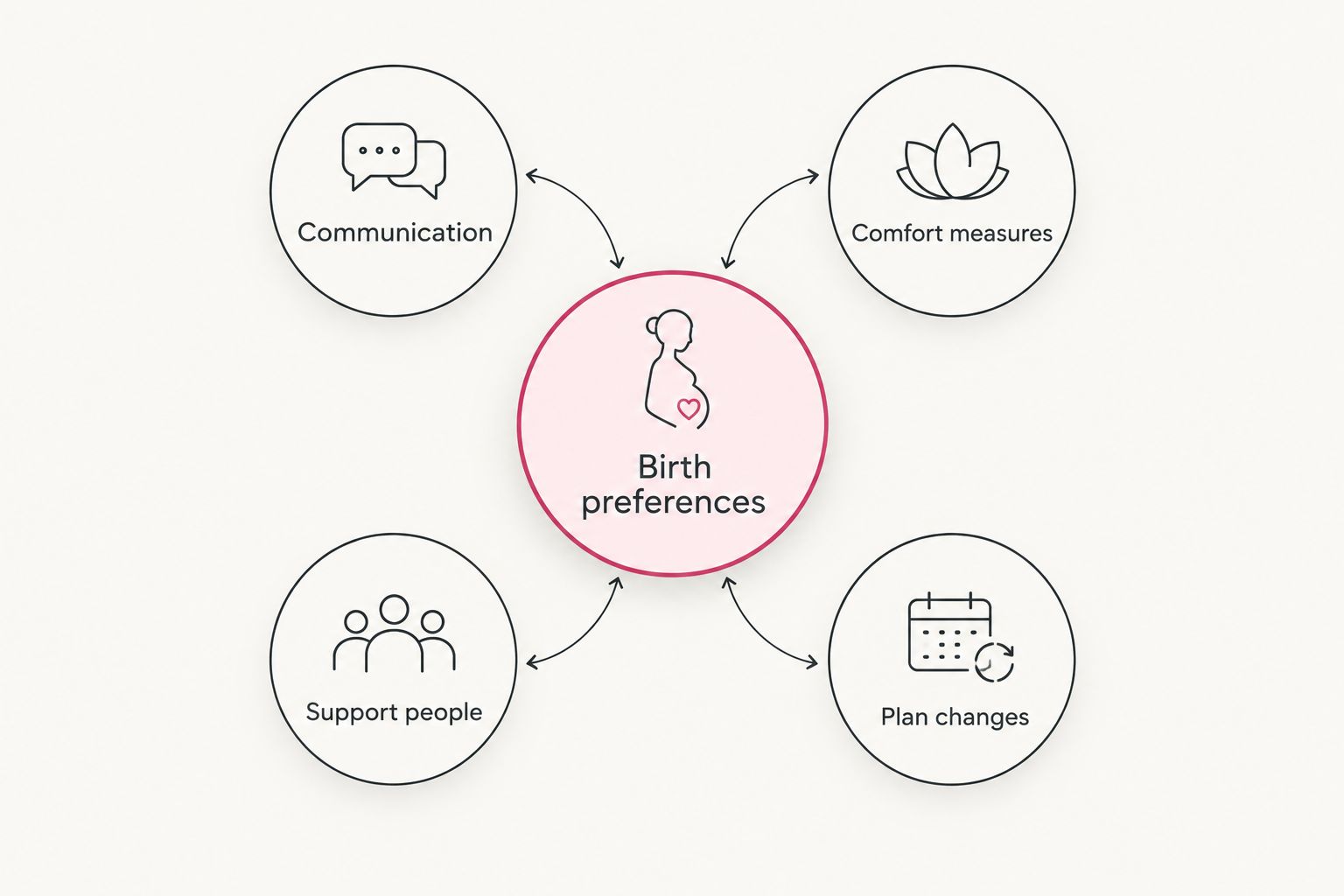
- State your preferred birth pathway without treating it as a promise.
- Describe how you want information shared.
- List comfort measures you want to try.
- Identify the support people you want involved.
- Record what would help if plans change.
Rehearse your skills in ordinary moments
Practice does not need to happen only in a candlelit room. Try a familiar calming cue while waiting, settling into bed, or noticing everyday tension. Keep your attention on the present activity; do not use guided hypnosis recordings while driving or doing anything that requires full alertness.
During your 2026 preparation, aim for a routine you can return to rather than an ambitious schedule that becomes another obligation. A short, comfortable practice is more useful to your routine than one you avoid because it feels demanding.
You can also rehearse changing course. Begin with one position, notice your comfort, and choose another. Ask your partner for a cue, then ask for quiet. This makes preference changes part of preparation rather than a sign that you have done something wrong.
- Attach practice to an existing quiet moment.
- Keep a calming phrase somewhere easy to find.
- Try relaxation in more than one comfortable position.
- Rehearse asking for a different kind of support.
- Notice what feels helpful instead of grading your performance.
Define success beyond the birth pathway
Before labor, decide how you will speak to yourself afterward. A vaginal birth is your hoped-for pathway, not a test of whether you practiced enough, relaxed correctly, or trusted your body sufficiently.
Hypnobirthing cannot promise a VBAC, eliminate every difficult sensation, or make every decision feel simple. It gives you a way to prepare your attention and responses. Medication, a changed plan, or a cesarean does not erase those skills.
Leave room for the joy and meaning of meeting your baby without requiring yourself to feel only joy. You can appreciate loving moments and still need time to process others. Your birth story belongs to you, and you decide when and how to tell it.
- Define success through support, understanding, and participation.
- Keep pain-relief choices separate from judgments about effort.
- Ask loved ones to avoid language about passing or failing.
- Plan who you can speak with after birth.
- Allow your feelings to develop without a deadline.
Compare your VBAC preparation options
For 2026, choose support by the gap you want to fill. Learning relaxation, understanding birth decisions, having company during labor, and processing an earlier experience are different needs. One option does not have to meet all of them.
The table separates each option's strength from its limitation. Ask what is included before choosing a service; a title alone does not tell you the teaching format, practitioner scope, or arrangement for birth support.
| Option | Best for | Strength | Key limitation |
|---|---|---|---|
| Self-guided breathing and relaxation | Beginning a personal practice | You can adapt the routine to your comfort | No individual feedback on your practice |
| Structured hypnobirthing education | Learning breathing, imagery, and self-hypnosis | Gives your preparation a teaching framework | Does not assess whether TOLAC is medically appropriate |
| Birth doula support | Emotional and practical support around birth | Adds a person focused on support | A doula does not provide medical care |
| Birth trauma support | Exploring distress connected with an earlier birth | Creates space to address the experience | Scope and approach depend on the practitioner |
| Hypnotherapy Mind | Tampa mothers seeking hypnobirthing or birth doula services | Offers these services alongside birth trauma healing services | Confirm the service format and fit for your circumstances |
Choose the support that addresses your actual need, not the option that promises the most beautiful birth story. You can combine approaches while keeping their roles clear.
Common mistakes VBAC moms make
Treating relaxation as a requirement for VBAC
Feeling afraid does not mean you have ruined your preparation. Use hypnobirthing as support, not as a rule that you must stay serene through every sensation and conversation. You are allowed to ask for reassurance.
Practicing only for the preferred scenario
A practice built around one imagined birth leaves out the moments when you need to ask a question or change your mind. Rehearse receiving information, requesting a pause when possible, and returning to a familiar cue afterward.
Borrowing another mother's meaning
A positive VBAC story can offer encouragement without becoming your blueprint. Notice which details speak to you, then return to your own circumstances. Someone else's choice about pain relief, support, or birth setting does not determine yours.
Making the birth partner responsible for staying calm
Your partner needs usable instructions, not an impossible assignment to prevent every worry. Tell them what to say, what to avoid, and when you prefer quiet. Make space for them to ask questions during preparation, too.
FAQ
Can I use hypnobirthing if I want a VBAC?
Yes, you can use hypnobirthing to prepare breathing, relaxation, and coping skills for a planned VBAC. Your maternity team separately assesses whether a trial of labor after cesarean is appropriate for your circumstances.
Does hypnobirthing increase my chance of a successful VBAC?
Hypnobirthing does not guarantee a VBAC, and this guide does not establish an increase in VBAC success rates. Use it as preparation for confidence and coping rather than a prediction of your birth pathway.
Can I have an epidural and still use hypnobirthing?
Yes, you can use hypnobirthing alongside an epidural. Breathing, imagery, and reassuring cues can remain part of your experience without requiring you to decline pain relief.
What if my previous cesarean still feels upsetting?
You can seek support without retelling every detail before you feel ready. Choose a practitioner whose scope fits your needs, and decide what you want to share at your own pace.
Is a hypnobirthing class the same as a birth doula?
No, hypnobirthing education teaches preparation skills, while a birth doula provides emotional and practical support around birth. Ask about each service's format and boundaries before choosing.
Will breathing exercises open my cervix?
Breathing exercises do not directly open your cervix. Their role in hypnobirthing is to support relaxation, focused attention, and coping with sensations.
Can hypnobirthing still help if I have another cesarean?
You can still use familiar relaxation and breathing skills if your birth includes a cesarean. A changed pathway does not make your preparation wasted or turn your birth into a failure.